
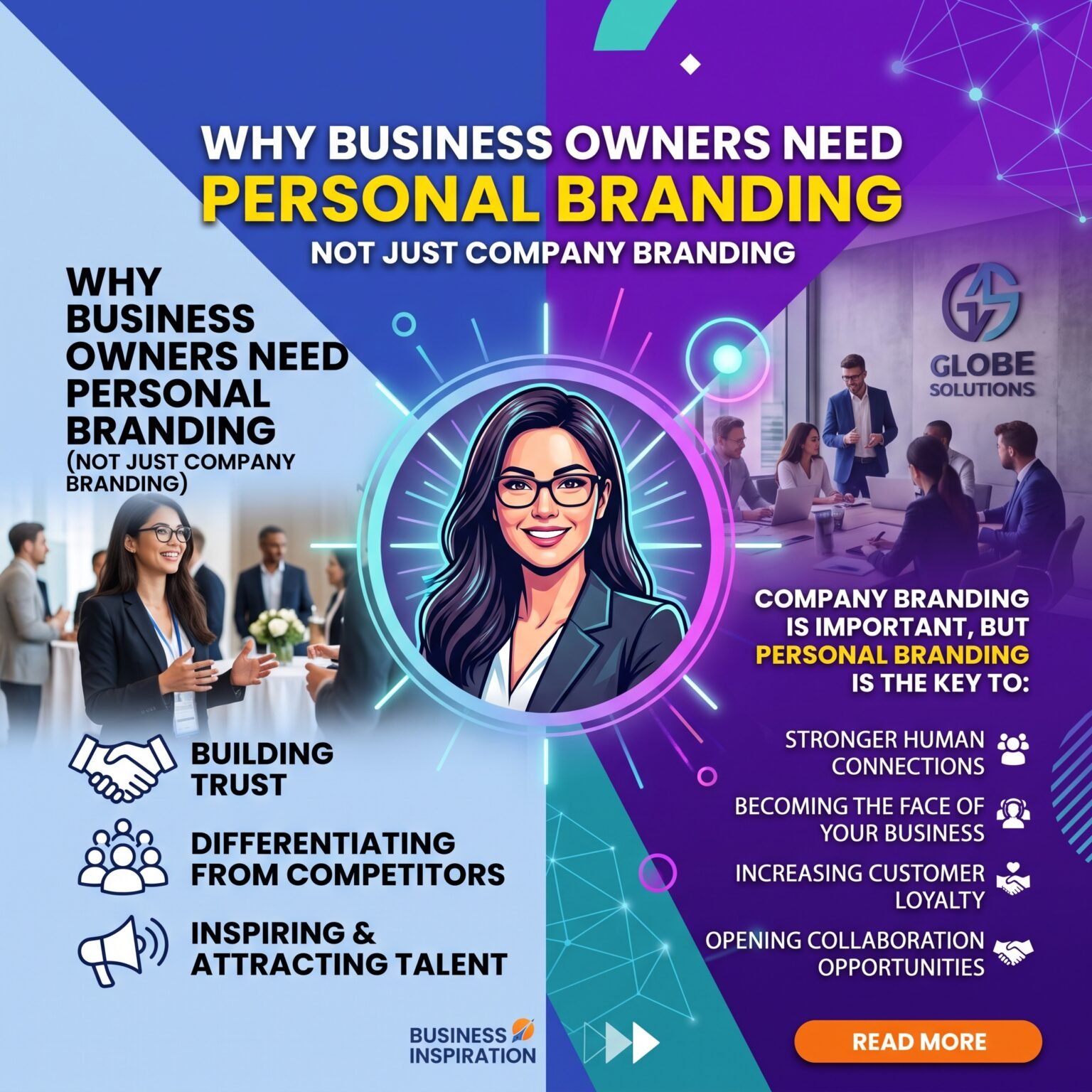
Here’s an honest question: if someone mentions your brand name, do they also know who’s behind it? Or is your brand just a logo and a tidy Instagram feed, with no face people actually remember?
Plenty of business owners — founders of small businesses, consultants, service providers — pour time and budget into company branding: the logo, the brand colors, the tone of voice, a consistent feed. All of that matters. But there’s one asset that often gets left out entirely: the personal brand of the person running the business.
In 2026, customer trust is increasingly built around human faces, not just company logos.
What’s the Difference Between Personal Branding and Company Branding?
Company branding is how people recognize the business: its name, logo, colors, products, and the experience it delivers. It’s tied to the entity, regardless of who’s currently running it.
Personal branding is how people recognize you as an individual: your expertise, how you think, the values you stand for, and the reason people choose to trust you personally — not just trust the product.
Neither replaces the other. They’re strongest when they work side by side: a solid company, backed by an owner people know and trust.
Why This Matters More Than Ever Right Now
1. Social media algorithms favor human faces over brand logos. Content from personal accounts tends to get higher organic reach and engagement than content from purely business accounts. People stop scrolling for human faces and stories, not for logos.
2. Trust jumps dramatically when prospects know who’s behind the business. This is especially true for service businesses and consultants — people buy from people they trust, not from anonymous entities. If you consistently show up as competent and credible in your field, prospects trust you faster, often before they’ve even had a conversation.
3. Collaboration, partnership, and media opportunities open up far more easily. Journalists, business communities, and potential partners find it much easier to reach out to an individual with a clear voice in their industry than to contact “the admin” of a company page.
4. Business valuation benefits too. If you ever want to scale, raise investment, or even sell the business, a founder with a strong personal reputation is often seen as an added asset — not just a line item in the financials.
5. It attracts the right talent. Quality employees and freelancers are more drawn to work with leaders who have a visible vision and track record, rather than just a company name on a job listing.
The Risk of Branding That Lives Only at the Company Level
- You blend in against competitors who do have a face and a story, while your brand becomes just “another option” with no personal differentiation.
- You’re more fragile during a crisis or rebrand — without a trusted individual behind it, the company loses its anchor of credibility exactly when it needs one most.
- You lose organic momentum from algorithms that increasingly favor personal content.
How to Start Building Your Personal Brand — A Simple Framework
1. Understand your communication style first
Before creating any content, it helps to understand your own communication style. A simple character assessment like a DISC test can reveal whether your natural style leans formal and educational, casual and relatable, or direct and to-the-point. Strong personal branding stays true to your actual character — it doesn’t copy someone else’s style.
2. Pick 3–4 content pillars
Don’t post randomly. Choose a few consistent themes, such as:
- Expertise in your field (insights, tips, case studies)
- Behind-the-scenes of running the business
- The values and principles you stand for
- Real results (portfolio, testimonials, team achievements)
3. Choose the platform that fits your audience
If your audience is B2B or corporate, LinkedIn tends to work best. If you’re targeting consumers directly, Instagram or TikTok is usually more effective. You don’t need to be everywhere at once — consistency on one or two platforms beats a half-effort spread across five.
4. Stay consistent, and don’t be afraid to show up
This is the hardest part for most business owners: the discomfort of being on camera or sharing opinions publicly. But consistency matters far more than production polish.
5. Let it run alongside company branding, not compete with it
Personal branding isn’t a replacement for company branding. Ideally, your personal content strengthens the story behind the brand — it shouldn’t compete with it or confuse your audience.
Common Mistakes to Avoid
- Content that’s all sales, all the time, with no educational value or personal story.
- Inconsistency — active for a week, then silent for a month.
- Perfectionism that leads to never posting at all.
- No content strategy, just posting “whenever an idea shows up.”
When Is It Time to Bring In Professional Help?
If you’re already stretched thin running daily operations and struggling to stay consistent building your personal brand, that’s usually the sign to delegate execution — while your voice and direction stay authentically yours.
Sentris Communication’s social media management services can be paired with a personal branding approach — starting with a communication style assessment (DISC test), content pillar planning, production (photo, video, graphic design, copywriting), all the way to monthly performance reporting — scaled to whatever level of support you need, from getting started to full talent styling support.
If you’re curious how this could apply to your specific situation, our team is happy to map it out first through a free consultation — no obligation, just a conversation about what you actually need.
FAQ: Personal Branding for Business Owners
Is personal branding only relevant for influencers or public figures? Not at all. It’s actually more critical for business owners, consultants, and service providers — because personal trust directly influences a prospect’s decision to buy.
I’m introverted and uncomfortable on camera. Can I still build a personal brand? Yes. Personal branding doesn’t have to mean video. Writing, behind-the-scenes photos, or text-based educational content can be just as effective — as long as it’s consistent and true to who you are.
How long before personal branding shows results? It varies depending on consistency and platform, but generally it takes several months of consistency before your audience starts recognizing and trusting your voice in the industry.
Can personal branding be executed with a team instead of doing it all myself? Yes, and it’s actually recommended. The voice and direction should stay with the business owner, but content production and platform management can be delegated to a team or agency.
Want your brand to have a face people trust, not just a logo people glance at? Let’s start a conversation about the personal branding strategy that fits your business — chat with the Sentris team here.
Read more digital marketing strategy articles on the Sentris Communication blog, including 2026 Digital Marketing Trends Every Bali Business Should Know.